
How Bench Warrants Work in Cherokee County
Cherokee County’s own materials frame the bench-warrant problem around failure to appear and failure to pay. The local Traffic Court page warns that letting a case sit past its court date, then skipping the date, can bring an arrest warrant, a license suspension, a steeper fine, and forfeiture of any bond already posted. State traffic guidance treats that missed obligation as contempt of court. A Cherokee County bench warrant is a judge’s order tied to a case already open before that judge. A complaint-based arrest warrant is different. It grows out of an incident report, a sworn deposition, and a magistrate’s independent probable-cause finding. Cherokee County records mark these entries FTA and FTP rather than the Texas term “capias pro fine.” Not every lapse follows one fixed track, though. The charge, the court, the timing, and the case’s orders all matter. An eligible traffic ticket may still allow payment or an OTR option before its date. Once that date has passed, or a warrant may already exist, ask the issuing court what it requires now.
Cherokee County Bench Warrant FTA Terms
Labels like FTA and FTP help a reader scan a Cherokee County case or detention record. Still, a label alone cannot tell you the full court status. The county Detention Center and state traffic materials support these terms.
- FTA
- Failure to appear, the local jail abbreviation for a missed required appearance.
- FTP
- Failure to pay, the local jail abbreviation for an unpaid court obligation.
- Contempt of court
- The state traffic service’s description of failing both to resolve a ticket and to appear.
- Recall or quash
- A court act that ends a warrant. No Cherokee County public motion form or fee was located.
- Bond forfeiture
- Loss of posted bond, one consequence listed by the Cherokee traffic court.
- Zero bond
- A local custody status that needs a presiding judge’s order or stated fine resolution.
Cherokee County publishes no official bench-warrant status-code list. Ask the court what its record means and which order is current. The clerk explains process and records, not legal advice.
Bench Warrant Issuance in Cherokee County
A judge may issue a Cherokee County bench warrant when someone fails to meet a duty in an existing case. The local source is clearest on traffic: not paying or otherwise disposing of the case before its date, combined with not appearing, can bring a warrant for arrest. Alabama Rule of Criminal Procedure 3.1 likewise notes that noncompliance with a summons can result in a warrant.
The supported Cherokee County sequence is simple: Court order or citation → required date or act → noncompliance → judge issues arrest order → service or court recall. The issuing court’s actual docket and order control each step. Cherokee County sources do not publish a general grace window, automatic warning policy, or fixed delay before issuance.
The statewide Traffic Service Center may let an eligible person request a new date. That option depends on the court and the case, though. A state illustration never proves the option exists for a past Cherokee County setting. Call the Circuit Clerk about a District Court date, or call the named municipal court about its own case.
Cherokee County Bench Warrant Court Sequence
A complaint warrant and a bench-style missed-court warrant reach arrest power by different routes. In Cherokee County, the magistrate process starts with a report to the Sheriff or municipal police. The complainant then gives a sworn deposition. A neutral magistrate independently decides probable cause. A missed-court warrant, by contrast, comes after the court already has a case or duty before it. The Ninth Judicial Circuit directory shows the circuit-level court contacts.
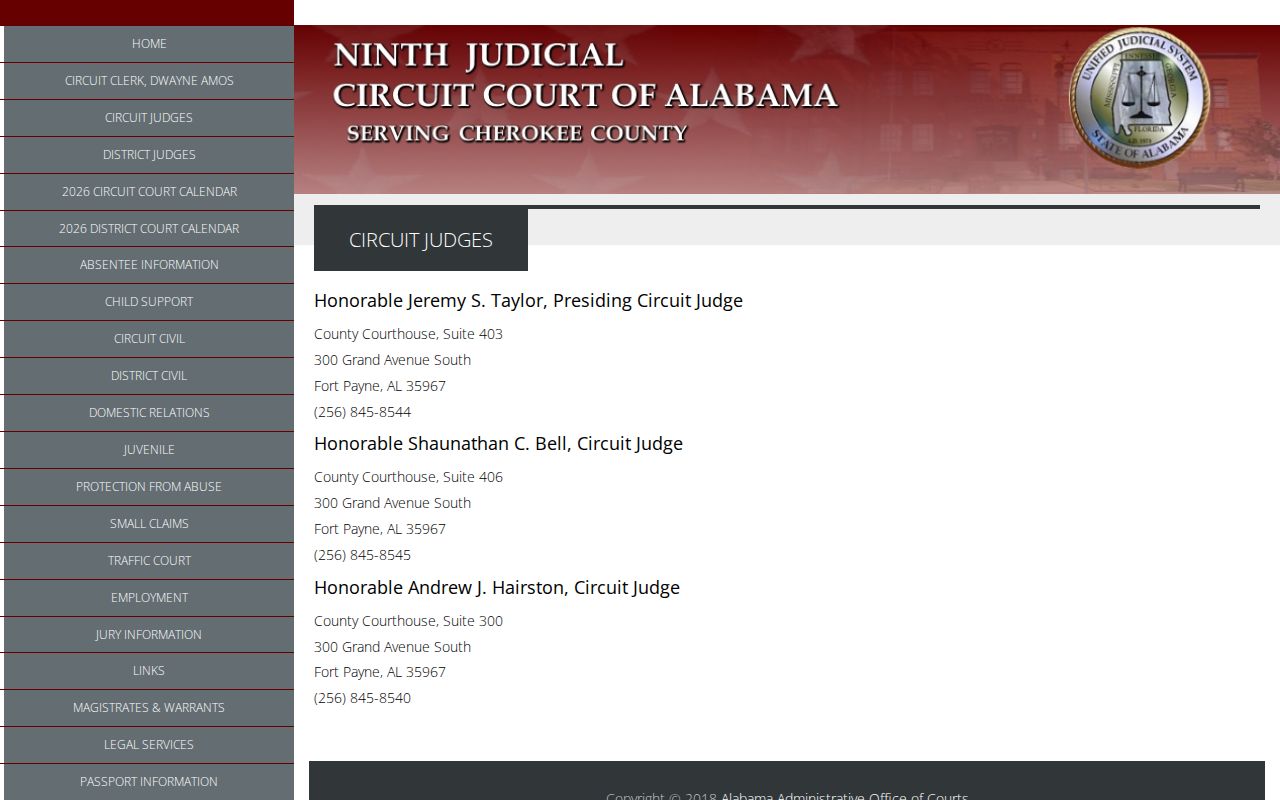
Those judges serve the circuit that includes Cherokee County, while local magistrates and the District Court handle the warrant and traffic work described in the clerk’s materials. Neither route is an online request made by the public. A judicial officer decides whether legal grounds exist. Once a bench warrant has issued, the court directs what appearance, motion, bond, payment, or reset is lawful in that case.
How Bench and Arrest Warrants Differ
The trigger is the key difference. A Cherokee County bench warrant typically follows noncompliance in a case already before the court. A complaint-based arrest warrant starts with facts about a claimed offense and a magistrate’s probable-cause review. Both can authorize an arrest, yet they do not share the same origin or the same resolution steps.
| Feature | Bench Warrant | Complaint Arrest Warrant |
|---|---|---|
| Trigger | Missed date, missed payment, summons noncompliance, or other court failure | Sworn complaint and probable cause for an alleged offense |
| Starting Record | An existing court case, ticket, or order | Incident report followed by sworn deposition |
| Decision Maker | The judge responsible for the court obligation | A neutral judge or magistrate |
| Next Step | Ask the issuing court about appearance, reset, recall, and any bond | Confirm through counsel, court, and the Sheriff’s process |
A Cherokee County search warrant differs from both. It allows a search for evidence or property, not the arrest of a person. A summons orders someone to appear without immediate arrest, though ignoring it can lead to a warrant under Rule 3.1.
Cherokee County Bench Warrant Court Routing
Jurisdiction is the routing fact that matters most. Cherokee County warrant magistrates cover county misdemeanors outside Centre and Cedar Bluff, county felonies at the complaint stage, certain traffic matters, and worthless checks. Centre and Cedar Bluff municipal misdemeanors belong to their own city courts. A county clerk search never replaces a city court call.
| Issuing Venue | Supported Role | Contact |
|---|---|---|
| Cherokee District Court | County traffic and district criminal duties | Circuit Clerk, 256-927-3637 |
| Cherokee Circuit Court | Felony and circuit-level proceedings | Circuit Clerk, 256-927-3637 |
| Centre Municipal Court | Centre traffic, misdemeanor, and ordinance cases | 256-927-5222; portal contact 256-927-2419 |
| Cedar Bluff Municipal Court | Cedar Bluff municipal cases | 256-779-6121 |
The official Cherokee District Judge directory provides the district court contact.
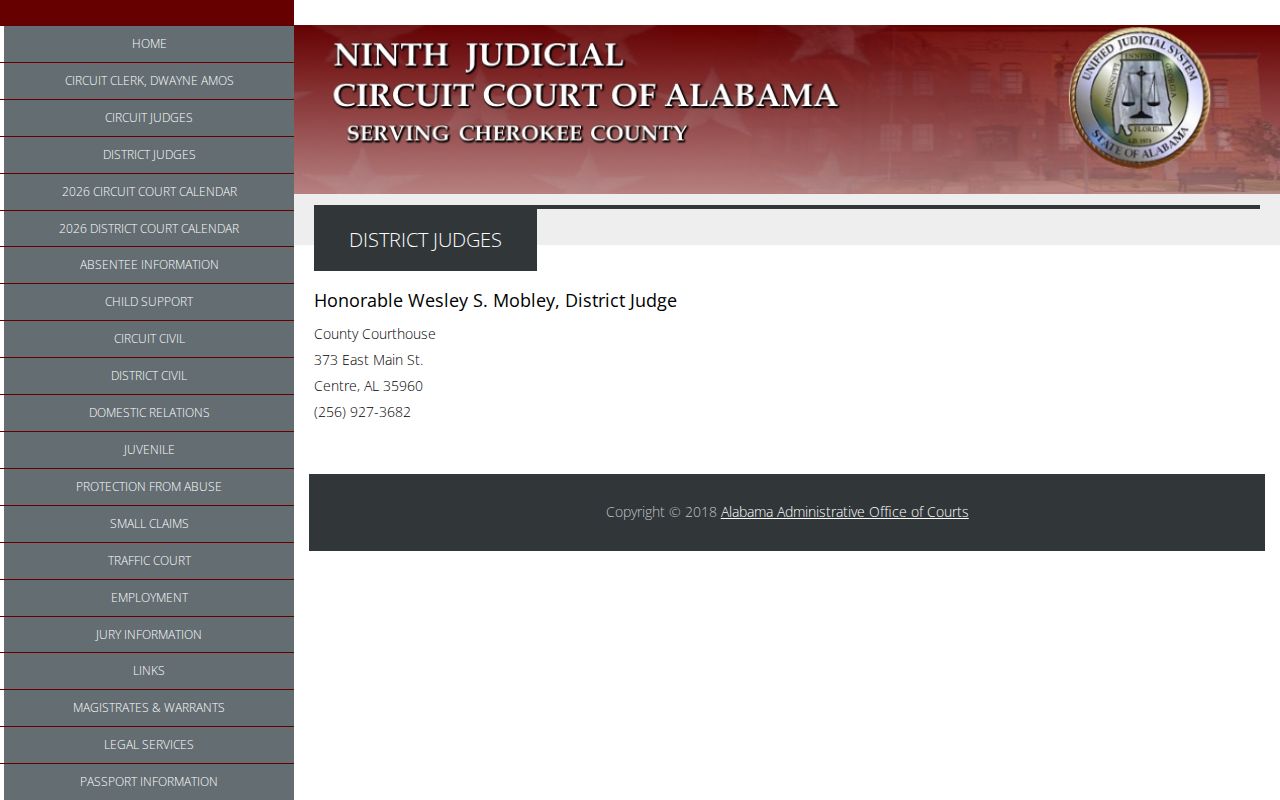
The district route matters most for Cherokee County traffic and local criminal cases that no separate municipal court holds.
Clearing a Bench Warrant in Cherokee County
Cherokee County publishes no universal recall form, walk-in docket, filing fee, amnesty schedule, or surrender brochure. Clearing a warrant means obtaining the issuing court’s lawful action, not deleting a web result. A recall or quash is a judge’s order ending the warrant.
- Identify the issuing court from the citation, notice, case record, or clerk confirmation.
- Ask a lawyer how to address the bench warrant, possible arrest, bond, and the missed duty.
- Contact the issuing court and ask whether an appearance, reset request, motion, payment, or other court act is required.
- If a county arrest warrant is confirmed, follow counsel and the official Sheriff confirmation process.
- After court action, ask how to confirm that the warrant status and any related record were updated.
Caution: Do not assume time or online payment ends a Cherokee County bench warrant; the issuing court must confirm what action changes the order.
The Cherokee County warrant records overview lays out the wider sheriff, court, and bond sequence. The clerk states procedure and record facts; legal strategy belongs with counsel.
Cherokee County Bench Warrant Bond Limits
Posting bond can get someone out of custody while the case goes on. It does not recall the bench warrant. It does not dispose of the charge either. Cherokee County allows cash, property, or a licensed bonding company, and each path has its own rules. Cash is paid in full at the Circuit Clerk, and the detention page links an official Cash Bond Online channel for the same purpose. A property bond takes two signatures. Each signer must own unmortgaged property equal to the bond amount. A bonding company must hold a Cherokee County license. Bond processing runs seven days a week, except 5 to 7 a.m., 11 a.m. to 1 p.m., and 5 to 7 p.m. Those are custody rules, not a surrender schedule. A zero-bond entry is different. Release then takes an order from the presiding judge, or for stated fine matters, payment of all fines through the Circuit Clerk. There is no countywide bond schedule, so ask what the court set in the specific case.
Cherokee County Courts That Issue Bench Warrants
The Cherokee County Circuit Clerk holds records for both Circuit and District Court. District Court takes county traffic and district criminal matters. Circuit Court is Alabama's general-jurisdiction trial court and handles felony proceedings. Municipal courts keep their own local traffic, ordinance, and misdemeanor cases. A citation or case number is the best routing clue. Check the paper. For Cherokee County District or Circuit Court, call the Circuit Clerk at 256-927-3637. Centre's city contact is 256-927-5222. Its payment portal lists 256-927-2419. Cedar Bluff's court portal lists 256-779-6121. Pay through a portal only after the court confirms payment is available and explains what happens to any warrant. The Cherokee County Sheriff serves local warrants and confirms a suspected county order in person, yet only the issuing court can recall, reset, or grant other relief on a bench warrant.
Cherokee County Bench Warrant Record Limits
Alabama's trial-court tools can locate a known case. They are not a statewide public bench-warrant registry. The official Alacourt and Just One Look access page describes a subscription product with case-by-case access.
A case record may supply the court and number needed for a call. A blank result does not clear a Cherokee County bench warrant, and the service itself makes no such claim. The Sheriff's Most Wanted entry shows a different kind of official list. Treat it as one piece of the picture, not the whole answer.
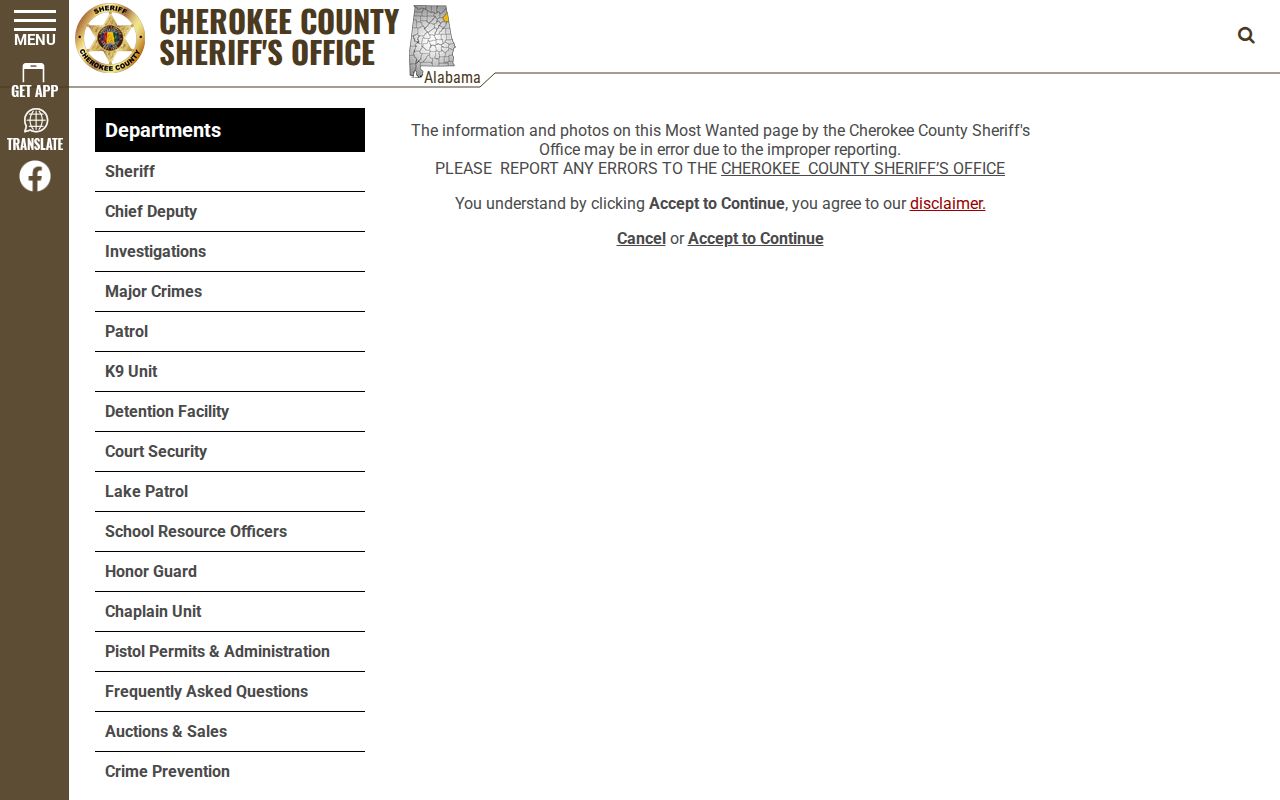
Most Wanted is a curated list, not a complete Cherokee County bench-warrant lookup. The program's disclaimer gate is not an individual profile. Local courts add another limit. An arrest warrant stays non-public until served. Juvenile, sealed, or investigative material can also stay closed. Use public records to find the right court, then seek direct confirmation and lawful advice.