
Inside the Cherokee County Most Wanted Program
The Cherokee County Sheriff hosts its Most Wanted feature on the official website behind a disclaimer and an "Accept to Continue" step. Nothing published there promises a complete list of every active warrant. The Sheriff posts no selection policy. There is no stated refresh schedule either. No entry count, task-force roster, or reward amount appears on the page. So describe it narrowly. It is a curated public-safety feature that may identify selected wanted matters. Read the Cherokee County list at its source. Skip copying names, photographs, charges, birth dates, addresses, or warrant numbers from it. Entries change without notice. If the Sheriff updates or removes someone, the originating page stays the only reliable place to see that change.
Use the source: Read the official Sheriff disclaimer and linked program directly; never rely on a copied roster or social-media repost.
No Complete Cherokee County Warrant Registry
Cherokee County publishes no public active-warrant search. The county court instead directs anyone who suspects an arrest warrant to appear in person at the Sheriff's Department. An unserved arrest warrant is not public. Those two local facts keep the Most Wanted page from working as a countywide clearance tool. A blank result can mean several things. The warrant may still be unserved. The matter may sit in a municipal court. The Sheriff may simply not have chosen that case for the program. A new case may not appear yet. A sealed or confidential record can stay closed even after other details surface. None of this says anything about a named person. It only shows why the issuing court and the Sheriff stay the right status channels in Cherokee County. For a side-by-side comparison, the Cherokee County active warrant search reference separates the Sheriff route, court records, traffic tools, and jail information.
How Cherokee County Most Wanted Lists Work
A most-wanted list is selective by nature. The publishing agency picks which matters deserve public attention. A true active-warrant registry, if one existed, would try to cover every open warrant. Cherokee County documents no such registry. That gap means the Most Wanted link says nothing about the size, age, or full makeup of the county's warrant workload. Before viewing, visitors pass the official Cherokee County Sheriff disclaimer. It warns that displayed information and photographs can contain reporting errors. Users rely on the material at their own risk. That caution matters. A tip should rest on current official information, not a saved image or a copied name.
- Most wanted
- A selected public-safety list, not a full county warrant inventory.
- Active warrant
- A warrant the issuing authority has not marked served, recalled, quashed, or otherwise closed.
- Unserved warrant
- An arrest warrant not yet executed; the Cherokee court says it is not yet public.
- Tip
- Information sent to law enforcement about a public-safety matter, not a way to check one’s own status.
Cherokee County Jail Records Are Different
The Sheriff's Inmates feature is a custody record, not a Cherokee County warrant list. It shows people already in booking or detention. An active warrant can exist long before arrest. Jail entries can also linger for custody reasons a most-wanted page never displays. Mix the two and the conclusions cut both ways.
| Official Channel | What It Addresses | What It Cannot Prove |
|---|---|---|
| Most Wanted | Selected Sheriff public-safety entries | Every active warrant in Cherokee County |
| Inmate feature | Booking or custody information | All people with unserved warrants |
| Court case service | Available trial-court case records | A clean statewide warrant status |
| OTR | A specific eligible traffic citation | Nontraffic or municipal warrant clearance |
The detention page also notes bond types and FTA or FTP labels. Those details concern custody and release. They never list all Cherokee County outstanding warrants.
Sending a Most Wanted Tip Safely
Send tips through the channel the Sheriff publishes. The Cherokee County crime-tip number is 256-927-9999. The official website adds an email-submission route. No promise of anonymity, a cash reward, a reward cap, or a special payment process comes from the source. Assume none of those terms. Call 911 for an immediate threat or emergency. A useful tip states what the caller directly observed, when and where it happened, and why it may relate to the current Cherokee County entry. Never confront or follow anyone. Don't post a home address, private identifier, or copied allegation online. The Sheriff's contact page warns that email isn't monitored around the clock and isn't secure for sensitive data, so urgent or confidential details need a safer direct channel.
- Confirm that the information comes from the live official Sheriff program.
- Write down only what was personally observed.
- Use 911 for immediate danger or the published tip number for a nonemergency tip.
- Follow law-enforcement instructions and do not approach the person.
Cherokee County Warrant Program Limits
Cherokee County runs no warrant roundup, amnesty week, or safe-surrender event. None is on offer. The Most Wanted page and its crime-tip hotline exist for enforcement and public safety, not amnesty. Neither one clears an outstanding warrant. Alabama's online traffic resolution handles routine court-dependent ticket options, but it does not cancel an arrest warrant through any general county program. Think your name is listed? Then skip the tip line. It is built for reporting crime, not for arranging your own surrender or asking about bond. A lawyer, the issuing court, and the Sheriff's general contact line handle those steps. If Cherokee County later announces an amnesty or roundup, confirm its dates, eligible cases, and instructions on an official county, court, or Sheriff source before acting. No reward amount or protocol is posted. Read no payment or anonymity promise into that line.
How Most Wanted Differs From an Active Warrant
A most-wanted listing in Cherokee County is a publication choice. An active warrant is different. It is a record state that only a court or law-enforcement office holds, and it changes through service, recall, quashing, or another court disposition. Names come and go on the Sheriff's page. That proves nothing about the warrant itself.
| Question | Most Wanted | Active Warrant |
|---|---|---|
| Scope | Selected entries | Any open warrant held by an authority |
| Publisher | Sheriff public program | Issuing court and serving agency records |
| Public visibility | Only what the Sheriff chooses to publish | May remain nonpublic before service |
| Best personal-status route | Not the tip line | Issuing court, counsel, and Sheriff confirmation |
A Cherokee County court case page can add useful context. Only the record holder can confirm whether a specific warrant remains enforceable.
Cherokee County Size Is Not Warrant Data
Cherokee County counted 24,971 residents at the 2020 Census. A 2025 estimate puts the figure at 26,413. Those numbers describe the county, nothing else. They say nothing about active warrants or about how often the Sheriff refreshes a most-wanted list. Court filing totals differ again. FY2022 reports show criminal and traffic work in the Circuit and District Courts, yet filings are not warrants and cannot be turned into a warrant rate. For the population figures, the official Census QuickFacts profile is the source. It carries no personal warrant information.
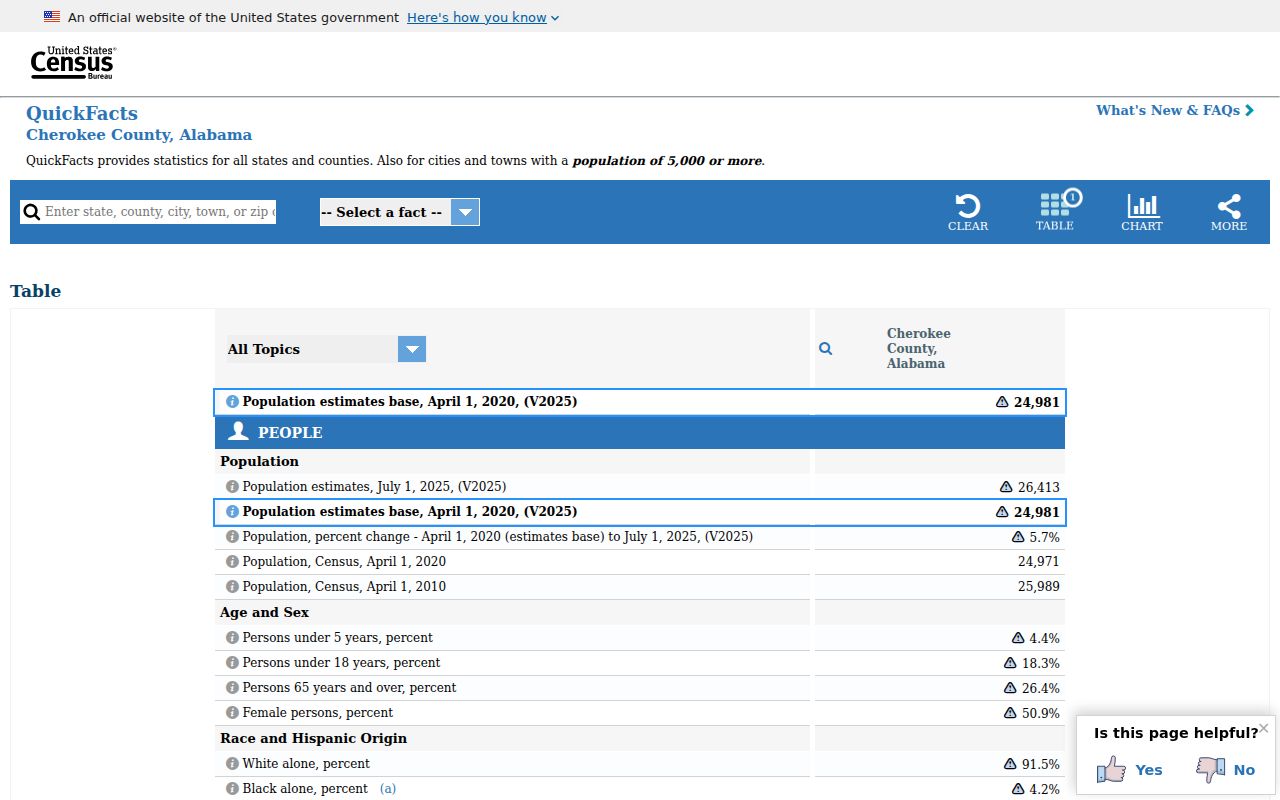
Population and caseload explain the scale of Cherokee County services. They cannot show how many people are wanted, where anyone is, or whether a named warrant is current.
When You Believe You Are Listed
Never use the crime-tip line to check your own status. Save the official page address. Note which agency and court seem involved. Then talk to a lawyer. Counsel can contact the issuing court, confirm whether a warrant is active, and advise on voluntary surrender, bond, or a motion to recall or quash. The Cherokee court's public instruction for a suspected county warrant is an in-person appearance at the Sheriff's Department. Plan that step. Do not assume a payment portal lifts the warrant. A traffic or municipal payment may need court approval once the date has passed. Bond secures release but never dismisses the underlying case. A zero-bond entry calls for a court order or the fine-resolution path the detention center describes. Match every step to the issuing court's current direction.
Important: Seek legal advice and confirm the issuing court before appearing, paying, or trying to arrange a surrender on a listed warrant.
Protection Orders and Cherokee County Warrants
A protection-order matter follows a narrow court route, separate from the Most Wanted program. Cherokee County's protection-from-abuse page explains local filing steps. It notes that a violation can involve warrant jurisdiction. That process belongs with the Circuit Clerk, the court, and law enforcement. A Sheriff most-wanted page replaces none of it. It is no substitute for the order, the case file, or emergency response, and the official Cherokee protection-order page shows the local court channel with public process information only.
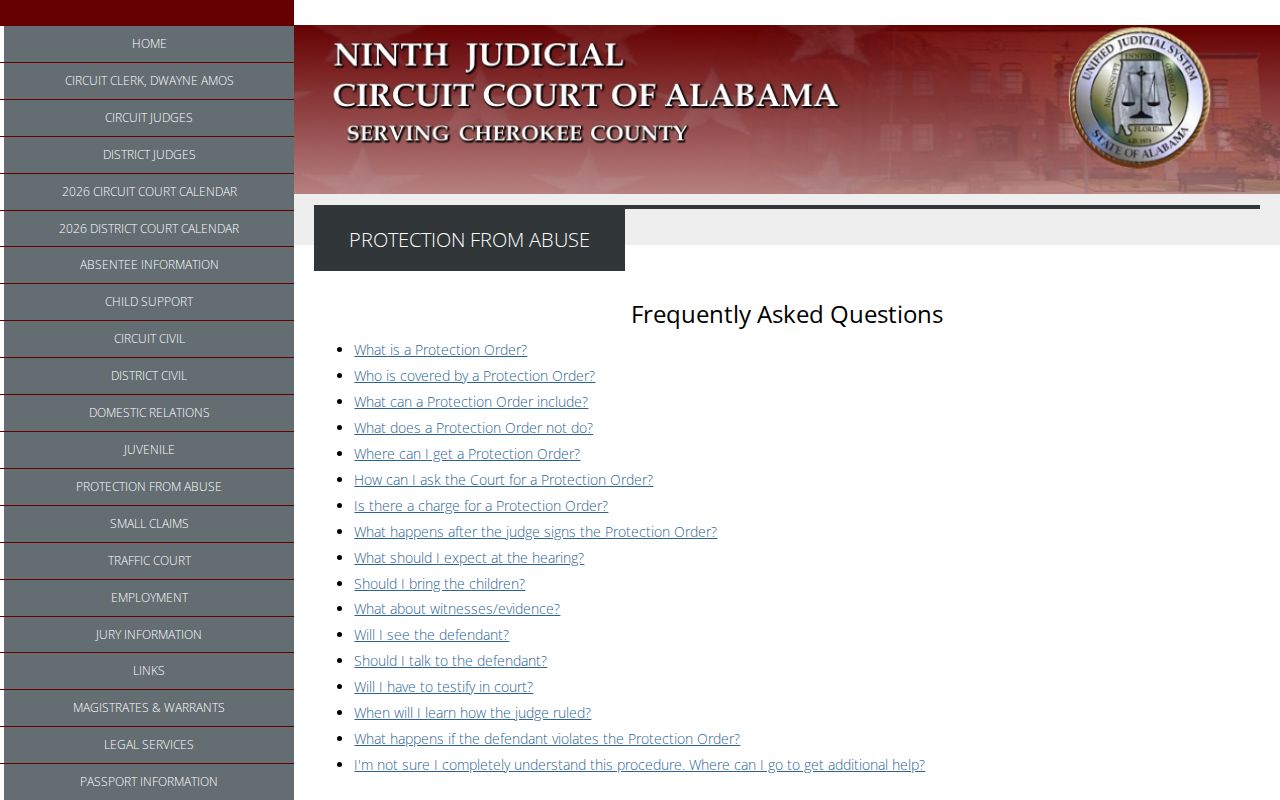
In immediate danger, call 911. Questions about an existing order or a Cherokee County court filing belong with the Clerk or a lawyer. A tip submission cannot answer them.